
When you hear the term “vibrating dryer,” can you picture what kind of machine it is?
In this article, we explain how a vibrating dryer works and its key features, with a focus on readers who are new to this type of equipment.
How Does a Vibrating Dryer Work?
A vibrating dryer is a vacuum dryer that dries powder materials under vacuum conditions.
The drying cylinder is mounted on springs and subjected to high-speed circular vibration. This vibration agitates the powder, while indirect heating under vacuum removes moisture from the material.
Unlike conventional dryers that use internal stirring blades, a vibrating dryer moves the material through vibration alone. This design eliminates the need for a rotating shaft seal for an internal stirring mechanism, helping prevent contamination from the shaft seal area.
Vibrating Dryer Designs and Model Features
CHUO KAKOHKI offers horizontal and vertical vibrating dryers to accommodate different materials and processing requirements. Both types are vacuum dryers.
<Horizontal Vibrating Dryer (VH Type)>
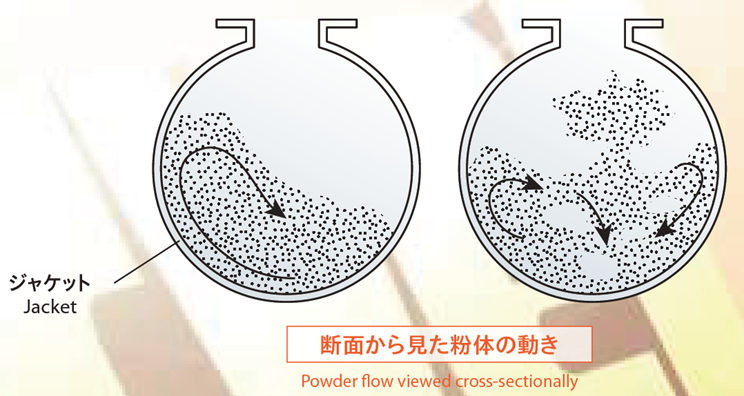
The horizontal vibrating dryer is designed to promote stable powder movement when the filling level is approximately 60–80% of the dryer's capacity.
It is suitable for medium- to large-scale processing of materials with relatively low liquid content. Both batch-type and continuous-type models are available.
<Vertical Vibrating Dryer (VU Type)>
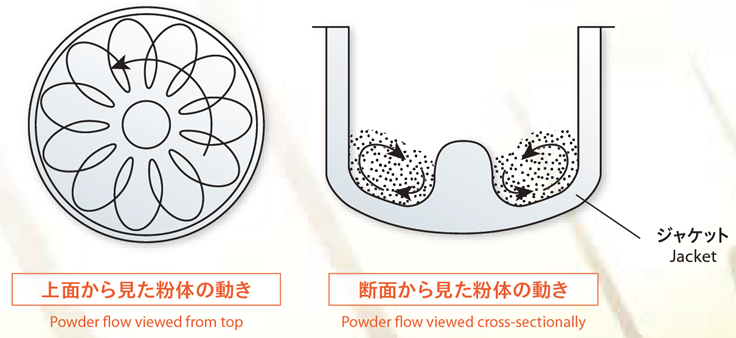
The vertical vibrating dryer is suitable for applications involving a wide variety of materials, as well as materials whose physical properties and batch volume change significantly as drying progresses.
It is suitable for small- to medium-scale processing and is available as a batch-type dryer.
You can see how our vibrating dryers operate in product introduction videos on CHUO KAKOHKI’s official YouTube channel:
・Horizontal Vibrating Dryer (VH Model)
・Vertical Vibrating Dryer (VU Model)
Inquiries and Sample Testing
Please feel free to contact us for advice on selecting a vibrating dryer, evaluating drying conditions, or arranging sample tests using your materials.
[Contact Us / Request a Sample Test]