
CHUO KAKOHKI CO., LTD.

OUR STRENGTHS CHUO KAKOHKI’s Strength

OUR STRENGTHS AND FEATURES CHUO KAKOHKI’s Strengths and Features

Japan's Pioneer and #1
in Vibrating Mills & Dryers.

While CHUO KAKOHKI started with distillation technology, it has consistently pioneered new technologies to meet the demands of changing times and evolving customer needs. This eventually led to the development of Japan's first vibrating mill in 1961. The addition of vibrating parts inherently made machines prone to breakdown. While other companies abandoned their efforts for various reasons, CHUO KAKOHKI persisted through trial and error, successfully manufacturing robust vibrating mills that endured even in large sizes. Since then, CHUO KAKOHKI has led the industry as a pioneer of mills and dryers utilizing vibration technology. This achievement boasts an over 95% share of the Japanese market (*). The exclusive know-how, cultivated through continuous technological innovation, is truly a culmination of our engineers' passion. We will continue to challenge new possibilities.

*According to our research in 2023, for the domestic market of vibrating dryers and vibrating mills.
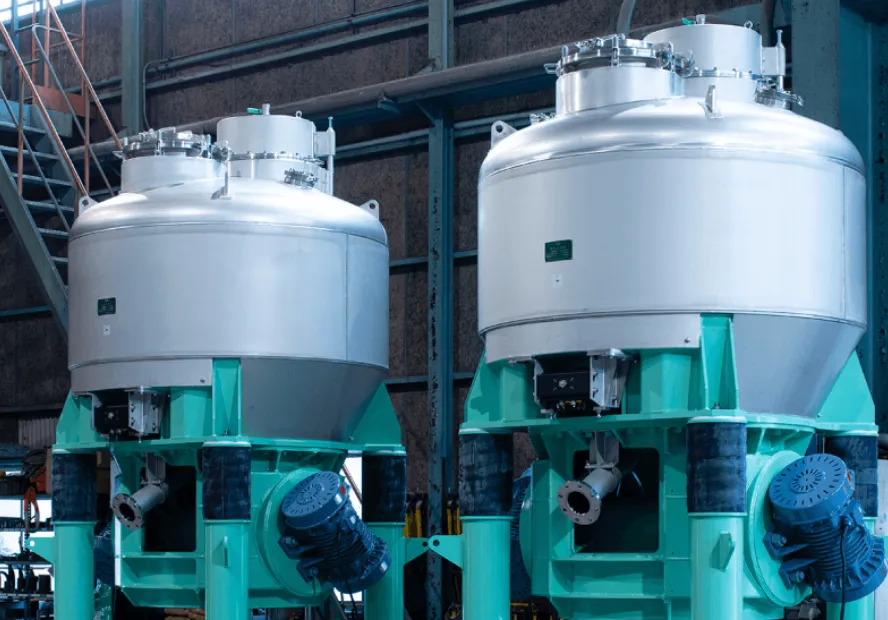
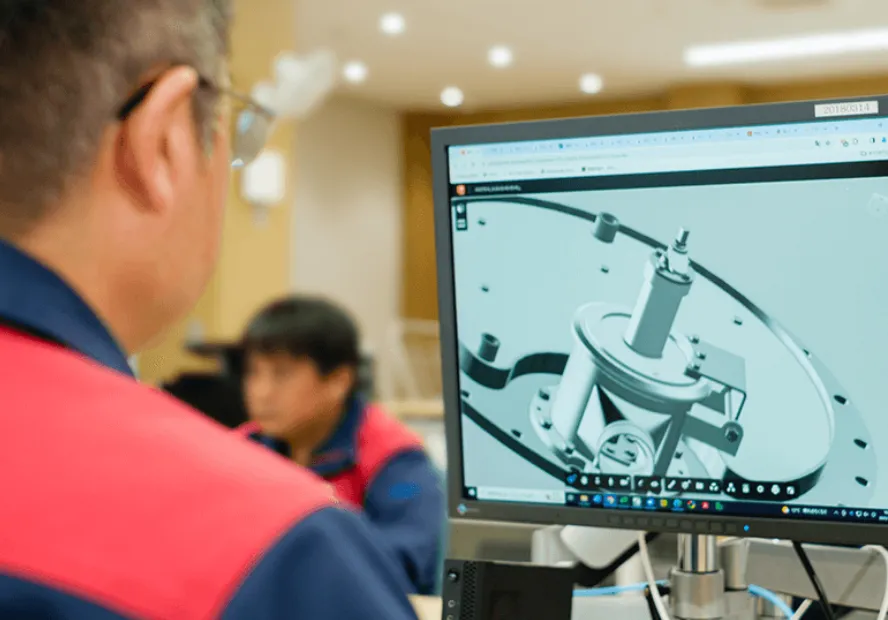
Fully custom‑made from the design stage.
We respond to a wide range of customer needs.

With proposal capabilities backed by a wealth of experience and a proven track record, we develop custom-made products that meet our customers’ requirements. We provide a one-stop service from design, manufacturing, and testing to on-site installation (including wiring and piping), allowing us to flexibly respond to diverse requests. We are particularly skilled in the design and manufacture of equipment for raw material production that requires high precision, such as for electronic components and fine chemicals where contamination by foreign matter is unacceptable.

ADVANCED RESEARCH AND DEVELOPMENT Industry‑Academia‑Government Collaboration

Continuous evolution to empower the creation of next‑generation materials ‑ industry‑academia‑government collaboration ‑

We are engaged in R&D in collaboration with industry, academia, and government bodies, including Nagoya University, Nagoya Institute of Technology, various research institutes, and the Ministry of Economy, Trade and Industry. By mutually leveraging technologies and know-how, we are strengthening our development capabilities.

  • Vibrating Dryer Utilizing Microwaves

    R&D on a Next‑Generation Vibrating Dryer Utilizing Microwaves for Producing Ultra‑Precision Powders

    Collaboration Partners
    Professor Fuji, Nagoya Institute of Technology
    Nippon Koushuha Co., Ltd.
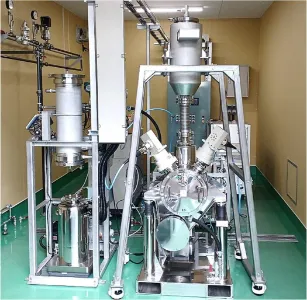
    Laboratory unit manufactured in FY2023
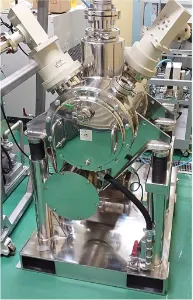
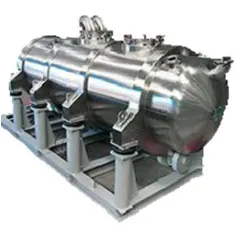
    • VH-25 Vibrating Dryer
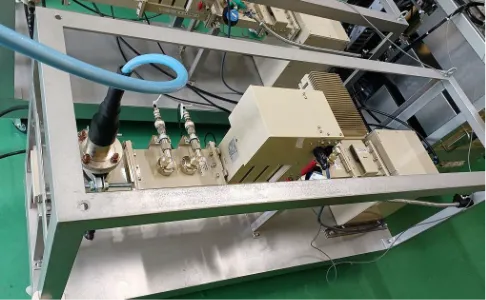
    • 1 kW Microwave Generator
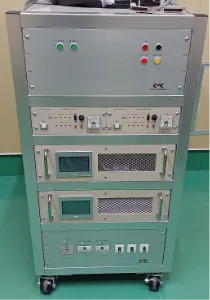
    • Microwave Rack
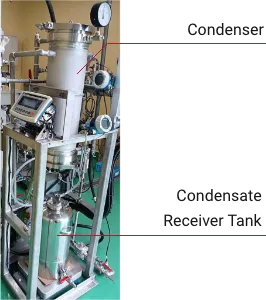
    • Auxiliary Equipment for Dryer (Solvent Recovery System)
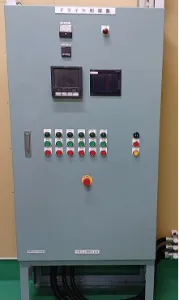
    • Control Panel
    • Overall Layout
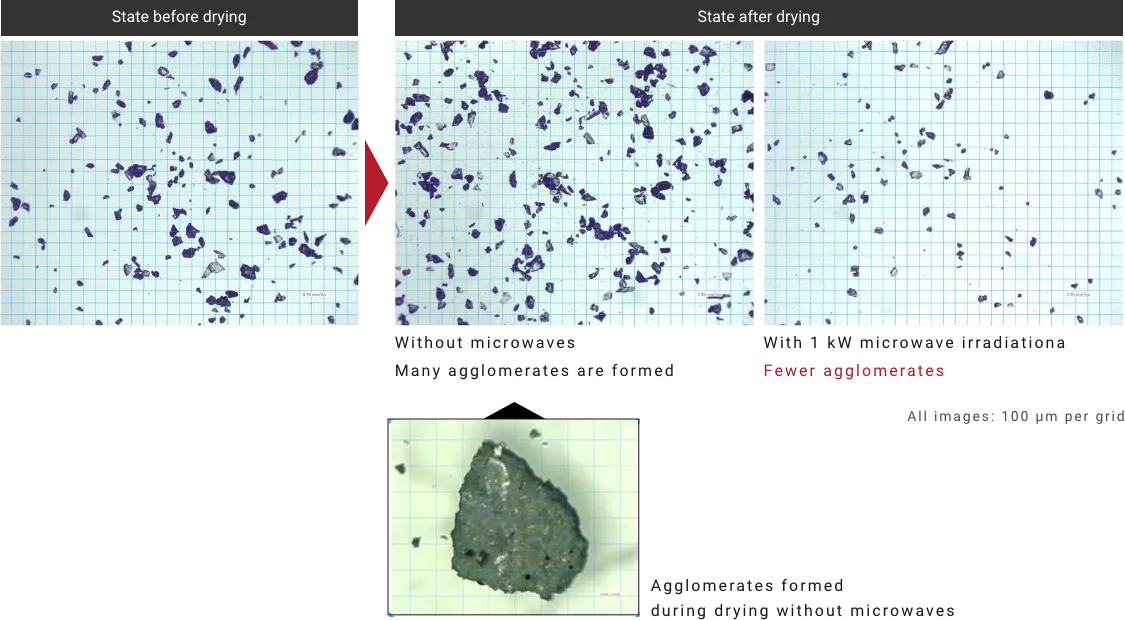
    Evaluation of Agglomeration Degree of Dried Powder (Experiment with Silica Sand)
    From

    R&D Support Project for Growing Small and Medium Enterprises (Go-Tech Project)

  • Cellulose Nanofiber Abrasive

    Prototype Development of an Abrasive Using Cellulose Nanofibers

    Collaboration Partners
    Aichi Center for Industry and Science Technology ‑ Industrial Technology Center

    Collaboration with the Industrial Technology Center of the Aichi Center for Industry and Science Technology, which is advancing R&D on cellulose nanofibers (CNF).

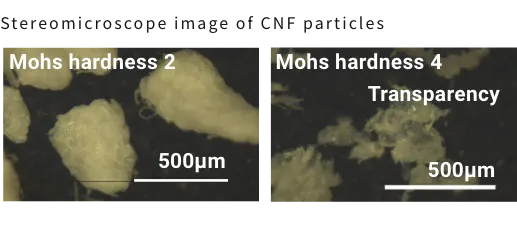
    CNF is expected to serve as an alternative material for a wide range of applications, and it was found that increasing the Mohs hardness of the dried particles from 2 to 4 makes them usable as a substitute for industrial abrasives (scrub agents).

    As a result of drying CNF using CHUO KAKOHKI's vibration dryer, the target Mohs hardness of 4 was achieved, contributing to the R&D effort.

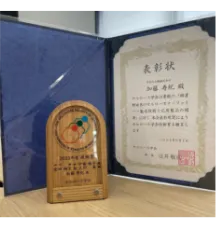
    In recognition of this achievement, CHUO KAKOHKI received the 2023 "Technology Award" from the Society of Cellulose Science and Technology, Japan.

    • CHUO KAKOHKI’s vibration dryer used in the study
    • Drying CNF with CHUO KAKOHKI's vibration dryer increased the Mohs hardness of the resulting dried particles from 2 to 4.
    • Certificate of the Society of Cellulose Science and Technology, Japan: 2023 "Technology Award"

    Industry‑Academia Collaborative Technology Development Support Project

  • Equipment for Converting Lumpy Powder into Free‑Flowing Powder

    R&D on Equipment that Converts Lumpy Powder into Free‑Flowing Powder Using Vibration and Microwave Heating

    Collaboration Partners
    Professor Fuji, Nagoya Institute of Technology

    New Aichi Creative R&D Subsidy

  • Freeze Vibrating Dryer

    Development of a Freeze Dryer with an Added Vibration Mechanism and Establishment of Prototyping Capabilities for Advanced Fields

    Supplementary Subsidy for the Manufacturing, Commerce, and Service Innovation Project

  • Energy and Cost Reduction in Bioethanol Production

    Survey and design of enzymes and yeasts suitable for raw materials (starch and cellulose) used in bioethanol production, as well as an energy- and cost-efficient fermentation and distillation‑purification system

    Collaboration Partners
    Shimane Bioethanol Research Association

    Survey Project on Biomass and Other Unused Energy Utilization

  • Development of a Bioethanol Production Reactor Using Confectionery Waste

    Development of a bioreactor that ferments sugars in confectionery waste among food waste to produce ethanol

    Collaboration Partners
    Ministry of Economy, Trade and Industry

    Act on Enhancement of Core Manufacturing Technology of Small and Medium Enterprises
    Certification of a Specific R&D Plan Based on Article 4, Paragraph 1

  • High-Concentration Continuous Filtration System

    Development of a Large-Throughput Cakeless High-Concentration Continuous Filtration System

    Collaboration Partners
    Professor Tsubaki, Nagoya University

    2nd University-Originated Business Creation Practical R&D Program

  • Dry High-Efficiency Cutting Tools for Difficult-to-Cut Materials

    Development of dry high-efficiency cutting tools for difficult-to-cut materials using an iron-based binder

    Demonstration testing and evaluation of the cutting performance of the tools

    Collaboration Partners
    Professor Nishino, Nagoya Institute of Technology
    Mr. Kobayashi and Mr. Mikami, National Institute of Advanced Industrial Science and Technology

    Regional Renaissance Consortium R&D Project

  • Mass Production of High‑Strength Thermoelectric Modules for Motorcycles and FeVAl Nanomaterials

    Development of high-strength nano-Heusler thermoelectric modules mountable on motorcycles Development of mass-production equipment for synthesizing FeVAl nanocrystalline powder

    Collaboration Partners
    Mr. Kobayashi and Mr. Matsumoto, National Institute of Advanced Industrial Science and Technology

    Regional Renaissance Consortium R&D Project

  • Conversion of Biomass to Fuel Alcohol

    R&D on conversion of biomass to fuel alcohol using acid- and salt-tolerant yeast

    Collaboration Partners
    Professor Hisamatsu, Mie University

    Regional Renaissance Consortium R&D Project

  • High‑Concentration Continuous Filtration System

    R&D on a cakeless high-concentration continuous filtration system

    Collaboration Partners
    Professor Tsubaki, Nagoya University

    Regional Renaissance Consortium R&D Project

  • Ultra‑Low‑Dielectric- Constant Insulating Films Using Nano‑Hollow Particles, etc.

    R&D on ultra‑low‑dielectric‑constant insulating films and anticorrosion coatings using nano‑hollow particles

    Development of shear‑dispersion equipment: R&D on dispersion and kneading machines for hollow particles

    Collaboration Partners
    Professor Takahashi and Associate Professor Fuji, Nagoya Institute of Technology
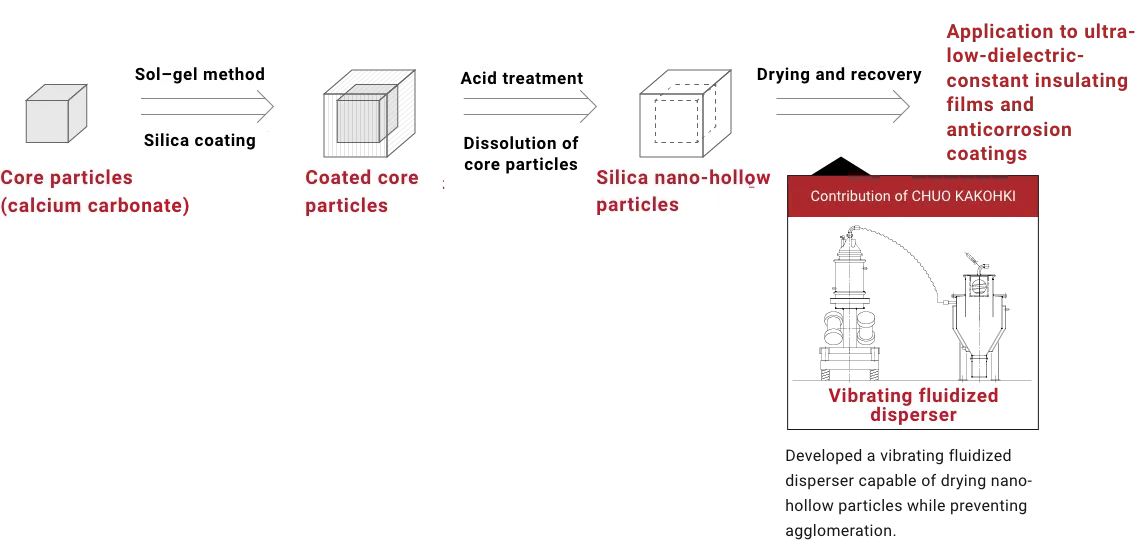
    Provision of Drying and Recovery Technology for Silica Nano‑Hollow Particles Using a Vibrating Fluidized Disperser

    Collaboration with Nagoya Institute of Technology, which was conducting R&D on ultra-low-dielectric-constant insulating films and anticorrosion coatings using nano-hollow particles.

    Developed a vibrating fluidized disperser capable of drying nano-hollow particles while preventing agglomeration, contributing to the research.

    Process of nano-hollow particle formation by the inorganic-particle template method
    • Example: Nano-hollow particles using silica
    Major applications of nano-hollow particles

    Surface coating for balls used in sports: Provides anti-slip properties.

    (Example: Adopted for the official volleyball used at the 2008 Beijing Olympic Games)

    Use in functional nano (hollow) filler production: for super‑insulating films and coatings, optical applications (e.g., transparency, light diffusion, refractive index control), low‑dielectric materials, and more.

    Regional Renaissance Consortium R&D Project

  • Liquefaction Process of Woody Biomass

    Development of a liquefaction process for woody biomass using microwaves

    Collaboration Partners
    Professor Mori and Associate Professor Itatani, Nagoya University

    Regional Renaissance Consortium R&D Project

  • High-Efficiency Fine Pulverization Technology for Woody Biomass

    R&D on high-efficiency fine milling technology for woody biomass using a multi-vibration mill

    Collaboration Partners
    Professor Mori and Associate Professor Itatani, Nagoya University

    NEDO Biomass Energy Conversion Elemental Technology Development

  • Slurry Property Evaluation Device

    Development of a device for evaluating slurry concentration and solidification characteristics

    Collaboration Partners
    Professor Tsubaki, Nagoya University

    Supplementary Regional Immediate-Effect Type Renaissance Consortium R&D Project